

Blog
How to Safely Clean & Preserve Metal Detector Finds
Knowing how to clean metal detector finds correctly is just as important as finding them. The wrong cleaning method can strip the patina from an old coin, scratch a relic or even destroy its historical value in seconds. In this guide we explain seven safe methods, which finds should never be cleaned and how to preserve your discoveries for years.
Before You Clean Metal Detector Finds: Identify the Metal
Every metal reacts differently to water, chemicals and abrasion, so first identify what you have found:
- Gold does not corrode. Warm water and a soft brush are usually enough.
- Silver develops a dark tarnish that many collectors want to keep. Clean gently and avoid aggressive polish.
- Copper and bronze form a green patina. Stable patina protects the object and should stay.
- Iron rusts quickly once it is out of the ground. Dry it fully and protect it as soon as possible.
If a find could be historically important, do not clean it at all. Record where you found it and ask a museum or your local finds liaison officer for advice. In England and Wales, for example, the Portable Antiquities Scheme records archaeological finds made by the public.
7 Safe Methods to Clean Metal Detector Finds
1. Rinse with Distilled Water
Start with the gentlest option. Soak the object in distilled water for a few hours to soften loose soil. Tap water contains chlorine and minerals that can react with some metals.
2. Soft Brushes and Wooden Picks
Use a soft toothbrush or a wooden toothpick to lift dirt from the surface and around fine details. Never use steel wool or metal tools on coins.
3. Ultrasonic Cleaning Baths
An ultrasonic cleaner uses high-frequency sound waves through water to dislodge caked-on dirt without scratching the surface. It works well for gold jewellery and modern coins. Avoid it for fragile, cracked or heavily corroded relics.
4. Rotary Tumblers
Tumblers are great for common clad coins and heavily encrusted iron items. Use soft polishing media and water to strip stubborn grime. Do not tumble old or valuable coins, because tumbling removes the original surface.
5. Specialized Cleaning Pencils
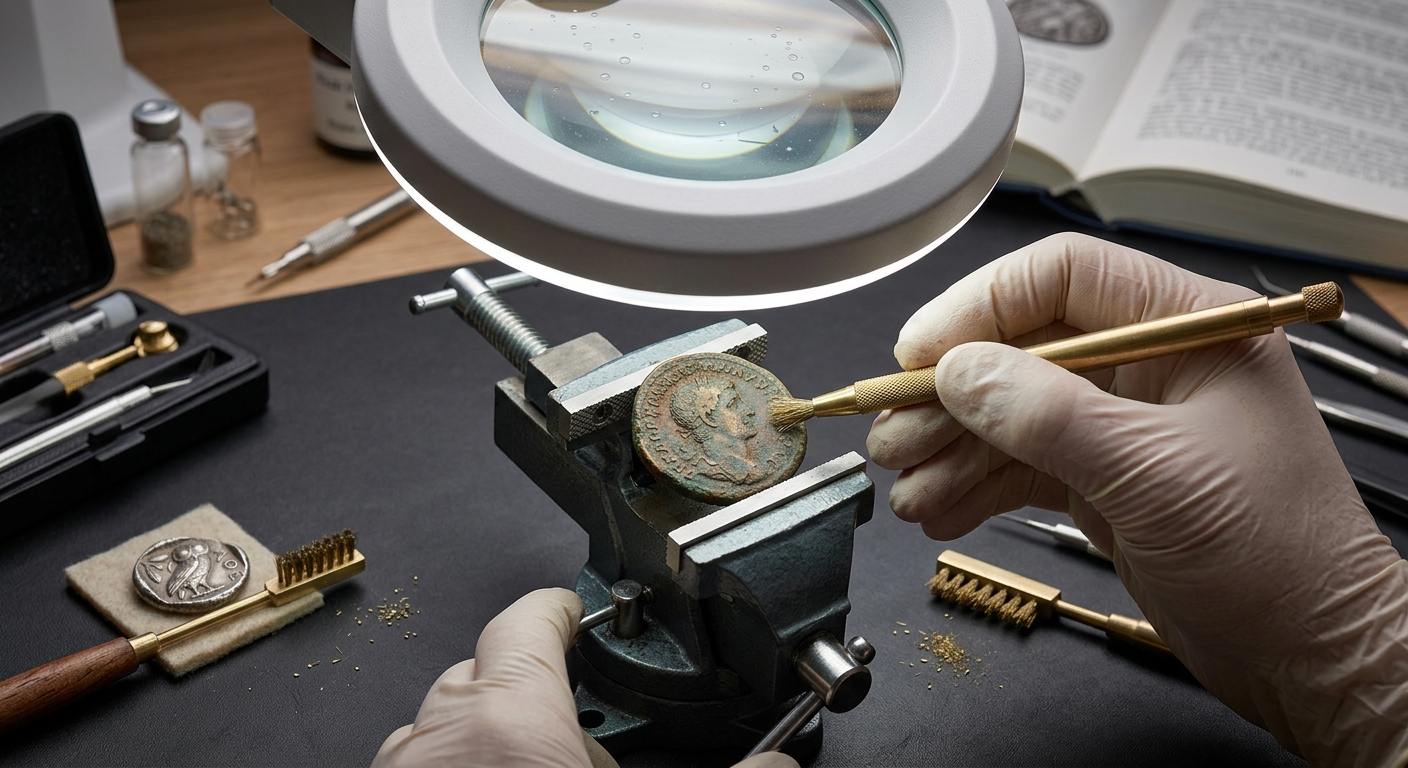
Brass and fiberglass-tipped cleaning pencils allow precise removal of dirt around fine coin details without scratching the underlying metal patina. Work slowly under good light or a magnifier.
6. Mild Soap for Jewellery
Gold and silver rings can be cleaned with a drop of mild dish soap in warm water and a soft brush. Rinse well and dry with a lint-free cloth.
7. Electrolysis for Iron Relics
Experienced detectorists use electrolysis to remove thick rust from iron objects. It is effective but aggressive, so practise on low-value items first.
What to Avoid When You Clean Metal Detector Finds
- Household metal polish and abrasive pastes on old coins
- Strong acids such as vinegar or lemon juice on copper, bronze or silver
- Wire brushes, sandpaper and steel wool
- Cleaning a find you have not identified yet
How to Preserve Your Finds After Cleaning
After cleaning, dry each find completely. Store coins in acid-free flips or capsules and keep relics in airtight boxes with silica gel to control humidity. Label every item with the date and location of the find – this information is often worth more to historians than the object itself.
Better Finds Start with the Right Equipment
A precise detector and a good pinpointer reduce digging damage, which means less cleaning later. A pinpointer helps you locate the target in the hole without scraping it with your spade. Browse our pinpointers, gold and metal detectors and accessories, or read our guide on metal detector storage and maintenance.
Conclusion
The safest way to clean metal detector finds is always the gentlest one that works. Start with distilled water and soft brushes, use ultrasonic baths and tumblers only for suitable items, and leave valuable or historical finds to the experts. With the right care, your discoveries will keep their beauty and their story for generations.